Sunday, February 27, 2011

Christmas Light Photography Tips and Advice


Edinburgh Photography City Bypass Speedway Race Track by John Gilchrist


Photo Credit: celtics baby clothes


We're out taking photographs of Christmas lights. There are so many beautiful displays, and we want to capture them on film. So as we prepare to take our pictures of Christmas lights, we back away so that we can capture the entire magnificent scene within our frame.

Correct. But also incorrect, if that's all we do. And this leads to our first Christmas photography tip for illustrating Christmas light displays.

(1) The best Christmas lights photography captures not only panoramic scenes, but also close-ups of the highlights within the panorama. We want both. Let's say that on the sprawling front lawn of a suburban home, we see Santa on his sleigh in one location, and a Salvation Army bell-ringer in a second spot, and a nativity scene someplace else. In addition to our distant Christmas photograph, we can also zero in on each of those three highlights.

(2) Opt for a high shutter speed. We want to illustrate the lights, not the light that they emit. A wide angle lens is for the panorama, and a macro lens is for the close-ups.

(3) Those Christmas light displays are so brilliant in the deep, dark, Silent Night. Maybe so, but our Christmas photography will be lousy at that point. Our photos will show the lights, but not the property in the background. Or, we'll see the property but we won't clearly see the lights, so to speak. Our best bets are at dusk or at dawn, and overcast usually is better than clear sky.

(4) If we're really dedicated and sticklers for perfection, we'll shoot our Christmas photography both at dusk and at dawn. Great photography of any sort is trial and error. Furthermore, if we show up maybe a half-hour before the optimal time, then we can plan our logistics and our camera angles, so that we're ready when the time is right. Extra time = excellence in our Christmas photography.

(5) Let's see here. We have the lights. We have the various props that go with the lights, such as the nativity scenes or Santa on his sleigh. We have the property in the background. Aren't we forgetting something? Oh yes, the sky. The sky! Look at examples of Christmas lights photography that impress you (or even thrill you) the most, and odds are that the sky will play a prominent role. Seek an angle at dusk that shows an afterglow in the evening sky. To include more sky, shoot from a low angle, upward toward the Christmas lighting display and toward the sky.

(6) People. Where are the people? Just because your subject is Christmas lights photography, that doesn't mean the scene must be devoid of people. Have some children pose in the scene, or better yet, just tell them to go ahead and frolic. This can add a unique element to your Christmas lights photography.

SOURCES

http://www.intofotos.com/photography/2007/11/10/how-to-photograph-christmas-lights/

http://strobist.blogspot.com/2006/12/how-to-photograph-christmas-lights.html

http://www.slrphotographyguide.com/tips/christmas-lights.shtml

Photographer Interview: Break into Concert Photography


Cuba Gallery: Summer / wave / ocean / sea / beach / natural light / water ripple / photography by ►CubaGallery


photo source


Anthony Siciliano of Ramsey, NJ, was initially attracted to photography through some playful competition with his friends. Even when he realized his friends had no idea how to use their cameras, he stuck with it and earned recognition in photography and videography.

As a photojournalist and concert photographer his experience is transferring into his newest venture as part of Awesome Farm - a video production and photography business formed with his friends. At least with the friends that know how to use a camera.

Siciliano answered a few questions and gave some advice for fellow photographers looking to break in to photography, specifically concert photography and photojournalism.

What was your first camera?
My first DSLR was a Nikon D80 with the 18-70 mm lens. However, the first point-and-shoot that I bought for myself was a Pentax Optio S-40, which I still have. I really enjoyed taking pictures of flowers, but I was dissatisfied with the performance and results of my point-and-shoot (particularly, the shutter lag). I looked into DSLRs, and ended up purchasing the D80. Thousands of dollars, and much gear later, here I am.

What photographers - well known or unknown - inspire you?
I really have fun with concert photography, live shows where I bring back photos that give you a good sense of what happened during an event. A photographer that does this very well is Todd Owyoung. His website is http://ishootshows.com/. Not only does he get awesome results, but also he shares his wealth of knowledge with everyone, which I respect immensely.

Check out the Strobist blog as well. It features off-camera lighting and lots of DIY equipment at http://strobist.blogspot.com/.

Is there a certain piece of gear you could not live without?
I do not skimp on my gear, and it has definitely paid off. In my opinion, it is better to save up for a longer time and get better equipment, than it is to spend early on something else. Unfortunately, I am addicted to buying new things, which can get very expensive. I could not live without any of this stuff, but if I had to pick one lens, the one that does most of my work is the 18-70mm lens.

Do you have any goals in mind with your photography?
I hope that I will be shooting famous bands very soon. A lot of doing that is getting to know the people who run the events, and the people who manage the bands. So far, the most famous people I have photographed in concert are Kate Voegele, Jack's Mannequin and the rest have been local bands. Currently, I shoot for local newspapers. The pay is not very good, but it is fun and better than nothing at all. Doing this will help me get exposure.

What advice would you give to someone who wants to shoot concerts?
The gear that is best for concert photography, at least in my opinion, is fast lenses and cameras with high ISO abilities. It is deceptively dark inside most music venues. My 50 mm lens does a lot of work there, with its extremely fast 1.8 aperture. My other lenses that go down to aperture 2.8 are extremely important. Large wide-open apertures are important for catching performers in action, without blur. Someone that wants to shoot concerts should definitely invest in a 50 mm lens, and save up to buy other fast lenses. Many places do not allow flash during performances, and your brand-new flash unit will not do any good when security tackles you. Also, watch out for drunken people and mosh pits at shows, which is a good way to wreck your camera.

How did you get a job with your local newspaper? What skills does that require?
When I was doing physical therapy for my tendinitis, I met a photographer who was shooting some photos for a brochure. We got to talking, and she gave me the contact info of a local photo editor. The skill involved in photojournalism is the same most other photographers use, except more irritating. Not only do you have to capture good pictures, but also you have to do it consistently, and make sure you get people's first and last names. If you do not get their names, editors will not use your photos. That can be a big disappointment, after all your hard work. You also have to be versatile and ready for anything. Get to events early and scope things out. that is the best advice I can give. Coming in late and not getting a good spot makes things a lot more difficult.

What advice would you give new photographers?
The best way to learn photography is by doing. When I bought my camera, I barely knew how to use the thing. One great thing I think everyone should do is a Project 365. That is where you take one photo per day (at least) and write a little bit about it on your Flickr account or a photo blog. It will help you learn to shoot in all current situations as well as on days or times where you think a camera might not be convenient to have. Then, at the end of the year, you look back and see how much you have improved, as well as your year in a series of photos. Also, do not forget to take a break when you are post-processing your images. I got a bad case of tendinitis from using the computer too much, and it really puts a kink in your photography.

Where can people see your photography?
Check out my photography on my Flickr site at: http://www.flickr.com/photos/scis/ and soon at www.awesomefarm.com.

Saturday, February 26, 2011

Starting Your Own Professional Photography Business


Edinburgh Photography, Double Yellow by John Gilchrist


source,photo source


So now you have the desire and determination to make it work, but what will you do? Photography is your passion, or is it? There are hundreds of photographers out there no matter where you live; what makes you so different from all the other photographers?

* Do you have the unique style necessary to attract the crowds to your camera?


* Can you survive in the cut-throat business of shooting day in and day out whoeversteps in front of your camera?


* Are you original and creative enough to think of different poses, create various styles of portraits of babies, families, couples and single people and still think sanely?

If you answered these questions positively, you may be on your way but that’s not all it requires. Though photography seems a fairly easy business where in movies and television you see a young man photographing beautiful women in studios or on exotic locations, selling all the images to magazines or having huge billboards displaying his pictures, that’s just a dream. Reality can be quite different from what many think of this profession.

It takes more than a fancy camera in this day and age to make a person buy your pictures, let alone to make a business out of it, surviving on income made with your photography. If you live in Spain or anywhere else, if there’s other photo studios then you’re competing against those already established with a good clientele. How can you compete against them?

Here are some recommendations to help you build your dream of working as a photographer:

a.       Create an unique style that stands out from the other photographers


b.      Be professional at all times


c.       Display only your best images to possible clients and change these often


d.      Offer specials to advertise yourself and your photography


e.       Have exhibits of your photography to help spread word of your new business


f.        Be patient and be sure to have a good supply of backup funds in the case they don’t come

Let’s discuss the above points….  This will help you to understand how to succeed.

Look at those you will be competing against; what do they offer in their photographic services? Can you offer the same or more? Most importantly, how does your style of capturing a scene or a face stand up against theirs? You will need to establish that style before you can start with a business. Be sure in what you do and do only that.

When you work with a client, you must maintain a professional environment at all times. In my many years behind a camera, I have seen amateurs make many mistakes during events, weddings and other assignments. In some cases, it wasn’t a mechnical or technical error but a public relations mistake – some people just don’t know how to work with the public. If you do the same, you will not last for very long. While people talk a lot of good images, they talk even more about how terrible a session was. You don’t want that type of advertisement. Research your assignments, know the light. If you have new equipment, then be sure you know what they can do and how you can use it. There’s nothing worst than finding out the hard way a flash or a new lens isn’t completely “right” in your hands.

Advertising yourself is the most important thing you can possibly do; no matter how good (or bad) you think you are, if nobody knows of your services or product, then you wont sell many if at all. When you display a poor image, then others will see the faults also – never display an image that is in bad taste. Show only your best work and watch people contact you. If they see bad results, they will stay away. Your best form of advertisement is word-of-mouth from a satisfied client!

While you may be one who doesn’t believe in the “store specials”, this method of advertising does work, and you can make it work to your benefit. A special attracts people who normally wouldn’t buy a product but does due to the price offer, or does buy and sees a special pricing as a reward for their loyalty. Act on that thought and you will see more customers contacting you!

Many people go to art exhibitions to see art – when this exhibit involves portraits of people for example, it can draw in customers from a different area you never thought possible. While many go for two main reasons – to see art and enjoy it, or to buy art for themselves – having an exhibit consisting of portraits for example, encourages possible interest in becoming a subject for your camera. It also works in a different direction, establishing your track record and building on your resume to show people interested in your experiences and awards, etc. in photography.


Lastly, starting a business is not easy or as “easy” as you may think photography may be. This profession is no exception to the rule. These days everyone having a digital camera makes them a “photographer”. Who will pay you to create their memories to last a lifetime? Before you actually start your new life in photography, be sure to have a good sum of reserve cash banked away to maintain your living expenses through the lean months – if that is the case. In most new businesses, the first two years can be the hardest and patience can save your sanity! The biggest mistake here is that after two or so years of little or no business, new businesses will close, but that is wrong! That’s the worst time to close as now you already have yourself in people’s minds: seeing the storefront, knowing you’re a photographer, etc. stick it out just a bit longer!

Tips for Your Commercial Photography Portfolio


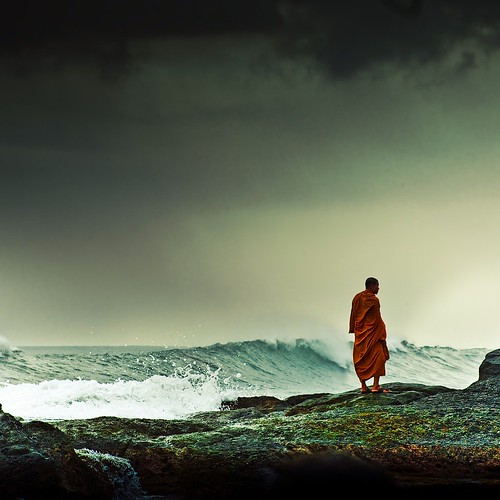
Cuba Gallery: Storm / wave / landscape / sea / ocean / sky / man / portrait / splash / photography by ►CubaGallery


credit


A great commercial photography portfolio is your calling card in the industry, and your ticket to winning clients and landing jobs as a professional photographer. Read on to learn 3 key tips that will help make your commercial photography portfolio shine, so prepare to start getting the gigs you need to advance your career. These commercial photography portfolio tips will take your clips to the next level, so that you can scale the ladder to your dream job.

1. Offer Your Commercial Photography Portfolio In A Variety Of Formats

When you hand out your commercial photography portfolio, one of the things it is crucial to communicate to a client is that when they hire you, you will do everything you can to make his or her life easy. You want to be seen as professional and responsive, and as someone who proactively anticipates your client's needs. One great way to make this impression fast is to have your commercial photography portfolio available in a number of formats, including in print, on CD, and online, as AllArtSchools suggests. When you follow this advice and have print, digital, and virtual clips available, your first question to a client can always be "What's easiest for you?", a sentence that will be music to any prospective employer's ears.

2. Pitch Your Commercial Photography Portfolio Directly To The Job At Hand.

Instead of having one commercial photography portfolio, have several, one targeted to each kind of work you're hoping to do in your career. Have you taken some gorgeous nature images? That's great, but a client who's hiring for a fashion shoot won't care! A prospective employer will hire the person who seems most likely to do a great job on the specific project at hand, so make sure everything in the commercial photography portfolio you hand to a possible client is directly relevant to the task they'll need you to do. Try doing as PhotoCritic suggests, and put together a portfolio of just your fashion work, another that highlights your nature shots, another for photos you've taken of products, and so on for each genre you've got clips for, and are seeking work in. That way, as you move forward in applying for a variety of jobs, you'll always have your most specifically relevant work at your fingertips, ready to impress your next boss.

3. Include The Right Written Information In Your Commercial Photography Portfolio.

As Marketing For Photographers and Photography points out, you don't need to include much written information in your commercial photography portfolio. However, what you do put in can make or break a client's interest in your work. By reducing the amount of text, you help keep your prospective employer engaged with the images you're presenting, which is the goal of your commercial photography portfolio. You don't need to put forward the technical information for each picture, like your equipment choices or shutter speed, because the client only cares about your end result, not about the road you took to get the shot. You should offer a brief description of what each picture is, to provide some context, and a clean, professional, and specific title for each shot, so that it's easy for clients to reference a particular image in your commercial photography portfolio when they're in discussion with you, or with any colleagues who may be involved in making the decision to hire you.